

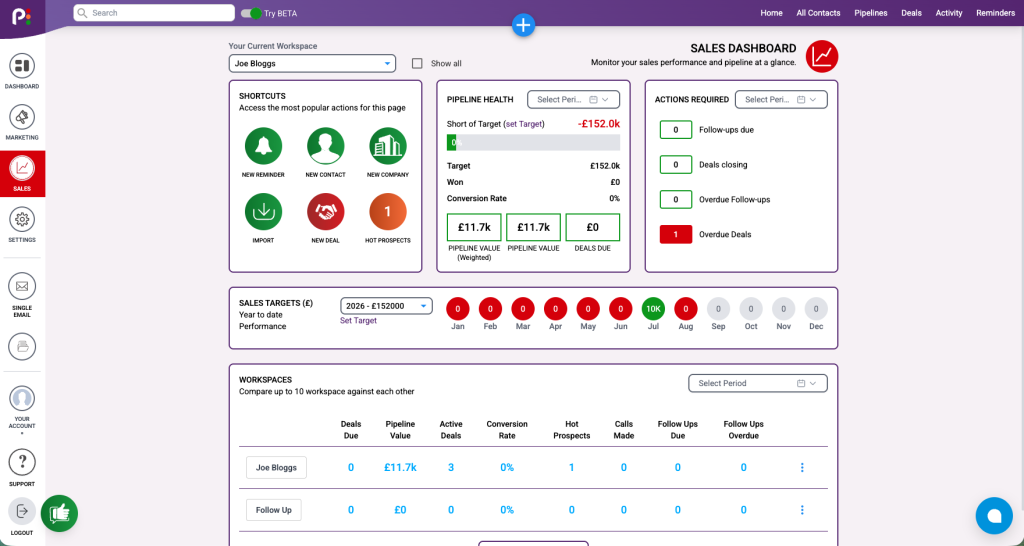
The features your current CRM probably doesn't have
All included in your plan. No add-on subscriptions and no upgrades to unlock them.
-
All in one place
One joined-up timeline for every contact
Every note, email, WhatsApp message and marketing activity, from you and your whole team, is saved against the contact automatically. See the full story in one place and pick up any conversation exactly where it left off.
Learn more about the joined-up contact timeline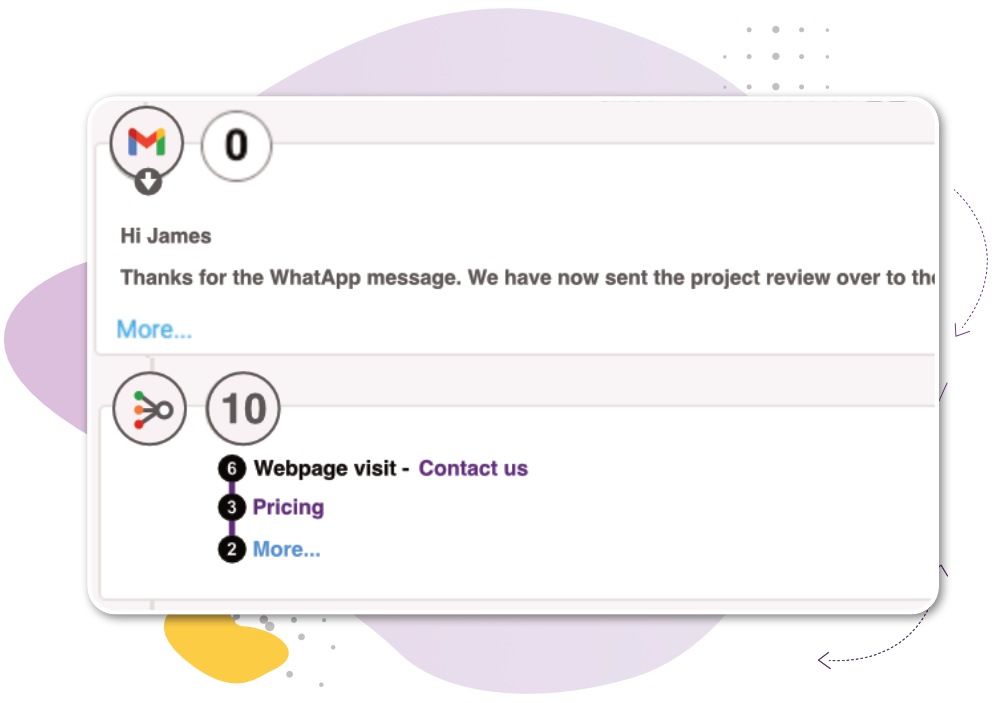
-
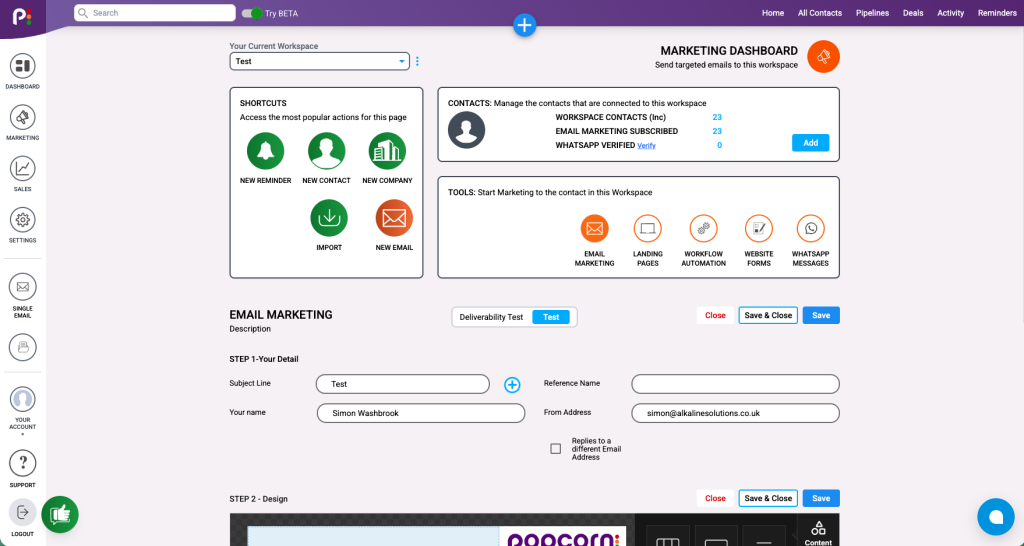
Essential marketing tools
Email marketing, WhatsApp campaigns, forms and landing pages to capture new leads and reach your customers, without extra tools.
Learn more about popcorn's marketing tools -
Website tracking and hot prospects
See which contacts are visiting your website and who's showing the most interest, so you call the right people first.
Learn more about website tracking and hot prospects -
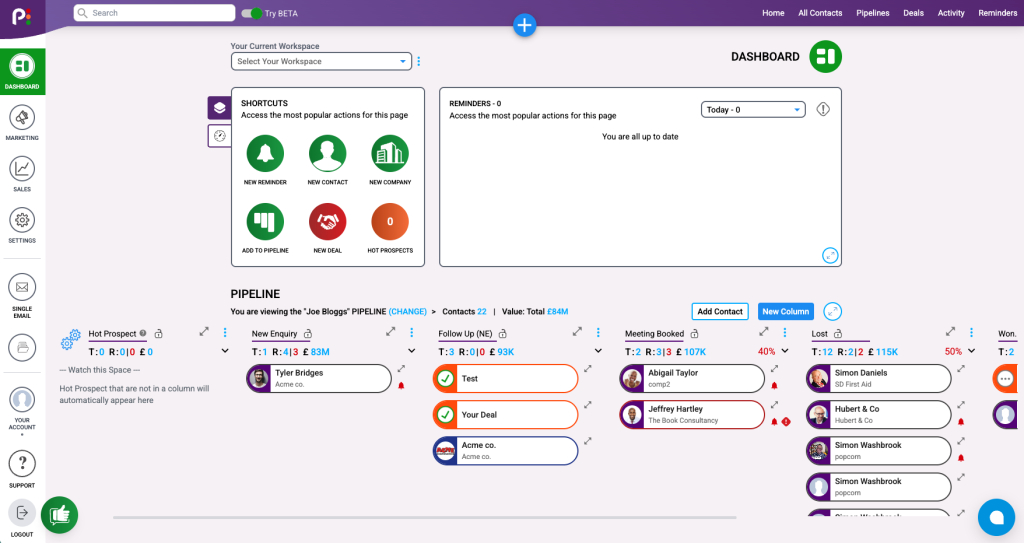
Pipeline health
Spots deals that have stalled or missed a follow-up, before they quietly go cold.
Learn more about pipeline health -
Quotes and proposals
Create professional quotes and send them by email or secure link, straight from the deal.
Learn more about quotes and proposals -
Marketing automation
Automated email journeys that keep new leads warm and nurture them until they're ready to talk.
Learn more about marketing automation -
See all features
And plenty more
Sales targets, one-click reports, a 30-day undo tool and more. Explore everything popcorn can do.

Moving to popcorn is easier than you think
Every paid plan comes with our Enhanced onboarding, worth £99, free when you sign up within 14 days of your demo or sign up without a demo. Our UK team does the heavy lifting, so you can get back to selling.
-
Step 1
We import your data with you
Bring one spreadsheet or export from your current CRM and we'll import your contacts together with you before your session, showing you the process so you can do it yourself next time.*
-
Step 2
40-minute one-to-one training
A live walkthrough with a member of our UK team, so you and your team know exactly how to use popcorn day-to-day.
-
Step 3
Set up your pipeline and customer journey
Practical advice on shaping your sales pipeline and customer journey around how your business actually sells, not a generic template.
*Your spreadsheet needs to be import-ready: clear column headings and data that's already in good shape. If it needs more than a few minutes of tidying, we'll ask you to clean it up before your session so we can make the most of your time.
- UK-based team
- No contracts
- No setup costs
- 4.9/5 on Google

“Everything about popcorn is so simple yet effective. It’s exactly what we need!”
Kinetic Communications
Set up and seeing results in 15 minutes. Read the case study
Your CRM and your accounts, finally working together
popcorn CRM is an official FreeAgent partner. Connect popcorn to FreeAgent and your contacts, deals and invoices stay in sync, so you can see who's paid, who's waiting and who to follow up, without switching between apps.


-
Contacts in sync
Your customers stay matched between popcorn and FreeAgent, so you never type the same details twice.
-
Deals in sync
Deals sync between popcorn and FreeAgent, so your sales pipeline and your accounts always tell the same story.
-
Invoices on the contact timeline
See every FreeAgent invoice in your contact's timeline in popcorn, alongside their emails, WhatsApp messages and notes.
Not using FreeAgent? popcorn also integrates with all major accountancy software, so your customers stay connected whichever package you use.